
Category Archives: Affordability

Florida Reforms Drive Benefits for Consumers

By Lewis Nibbelin, Research Writer, Triple-I

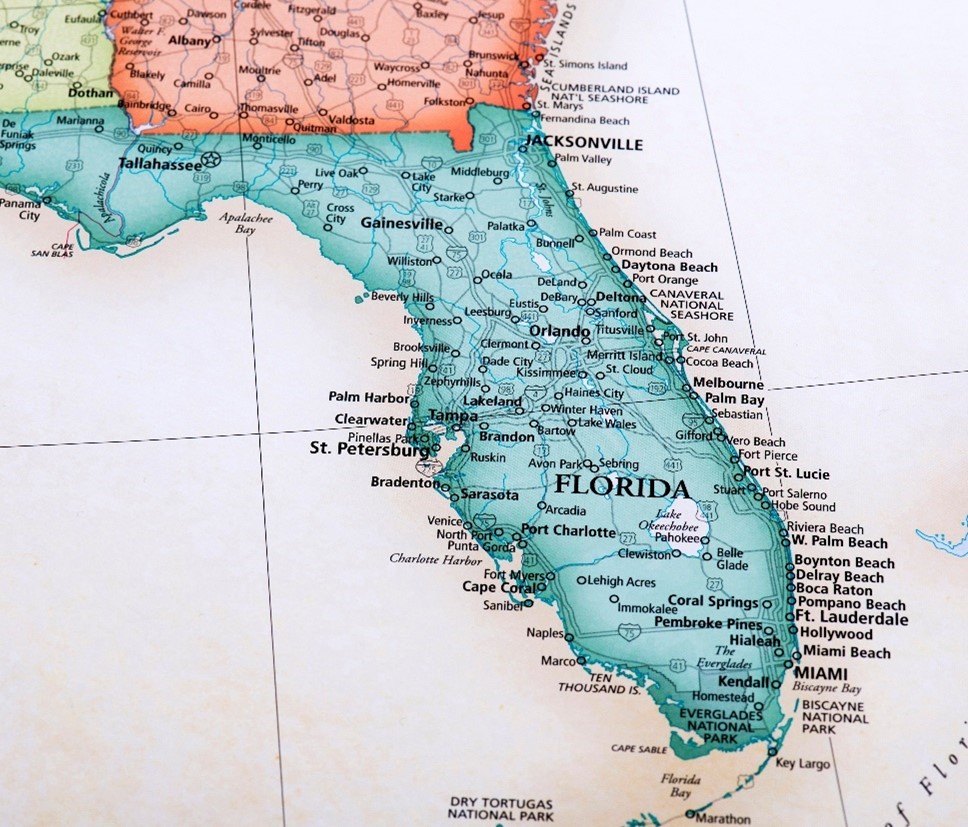
Legal system reforms targeting fraud and excess litigation in Florida are helping drive renewed underwriting business and lower premium rates for consumers throughout the state, signaling ongoing improvements in the Sunshine State’s insurance market health, according to an S&P Global Market Intelligence analysis.

Post-reform, nearly 20 new property insurers have entered the Sunshine State and existing carriers have expanded their market share, fueling double-digit growth in direct written premiums for many of the state’s largest insurers in 2025. As policyholders shifted to the private market, policies in force for Citizens Property Insurance Corp. – the state-run insurer of last resort and previously the state’s largest residential insurance writer – dropped by 57.8 percent from 2024.

Premiums for Citizens policyholders fell 43.7 percent, alongside extensive premium reductions for thousands of Florida homeowners and drivers across the property/casualty insurance market. Florida’s top five auto insurance groups, for instance, averaged a more than 6 percent rate reduction through mid-year, accounting for 78 percent of the state’s auto market. These reductions have increased to an average of 8 percent based, on the most recent 2026 regulatory filings.

Claims-related litigation has also plummeted, slashing the market’s defense and cost containment expense ratio to 1.9 percent, S&P reported – a major decline from 8.4 percent in 2022, before the 2022 and 2023 reforms were fully implemented. In dollar terms, 2025 saw $537 million in direct incurred legal defense expenses, down from roughly $792 million the prior year and from $1.6 billion in 2022.

Amid decreasing litigation costs, Florida’s residential property insurers recorded over $2 billion in underwriting gains in 2025, with the state’s homeowners’ market posting its highest net income in more than a decade.

Favorable 2025 results are good news, but it’s important for policyholders and policymakers to remember the sustained, industry-wide reform efforts that underpin Florida’s current stability. Despite their measurable benefits to consumers, the reforms have faced repeated legislative attacks, threatening to undo much of this progress.

Florida’s strong market performance also reflects relatively mild catastrophe activity in 2025, including the absence of any U.S. hurricane landfalls. Though the 2026 Atlantic hurricane season is forecast to be “somewhat below normal,” ongoing caution is essential, as just one significant landfall could threaten recent market growth and leave lasting damage.

Compounding these challenges is Florida’s most severe drought in over 25 years, which has produced nearly 2,000 wildfires in 2026 year-to-date and impacted many areas traditionally considered low risk. With wildfire risks still looming, the shift underscores the dynamic headwinds that imperil the state, necessitating continued legislative support of reforms to keep coverage affordable and available in one of the most complex states to insure.

Learn More:

Legal System Abuse Awareness Campaign Spreads Across U.S.

Lessons for Texas in Florida Legal Reforms

Florida Premiums Drop Amid Post-Reform Stability

Litigation Reform Works: Florida Auto Insurance Premium Rates Declining

New Consumer Guide Highlights Economic Impact of Legal System Abuse and the Need for Reform
Florida Senate Rejects Legal-Reform Challenge

Illinois Bill Would Hurt Insurers and Customers

By Jeff Dunsavage, Head of Research Publications and Insights

Senate Bill 1486 – currently moving through the Illinois General Assembly – would unnecessarily burden insurers and hurt the customers it is intended to protect.

“The measure would add new regulatory layers that could impede the accurate pricing of risk while doing nothing to address the underlying causes of rising premiums,” Triple-I said in a recently published Policy Brief. “Premiums are increasing at different rates across the country, reflecting a mix of factors that include climate events, shifting populations, rising costs to repair and replace property, and legal system abuse.”

All these factors drive up the number and the cost of claims and, if not properly addressed, could erode the policyholder surplus insurers are required to keep on hand to pay claims. If surplus declines below levels mandated by regulators, insurers must raise rates or rethink their appetite for writing coverage in riskier states.

Neither option is good for consumers.

If affordability is the goal, the most effective path is cost reduction. Illinois leaders should model the behavior of states that are addressing the root causes of rising insurance premiums – not just treating the symptoms.

The brief also points out that both homeowners’ and personal auto insurance in Illinois is more affordable than the U.S. average, when measured as a ratio of average insurance expenditures to median household income.

Learn More:

Trends and Insights: Illinois (Members-only content)

Illinois Storms Highlight Severe Weather Losses

Triple-I Legal System Abuse Awareness Campaign Enters California, Illinois

Illinois Lawmakers Reject Risk-Based Pricing Challenge

New Illinois Bills Would Harm — Not Help — Auto Policyholders

States Take the Lead on Third-Party Litigation Funding Reform

By Lewis Nibbelin, Research Writer, Triple-I

The Louisiana Department of Insurance’s new partnership to combat marketing tactics tied to third-party litigation funding (TPLF) is only the latest in a wave of state efforts to limit the practice across the country.

TPLF occurs when outside investors profit from lawsuits by paying for legal costs in exchange for a share of the settlement or judgement if the suit wins. In practice, this incentivizes prolonged and unnecessary cases and can culminate in extreme nuclear verdicts of $10 million or more.

By partnering with the National Insurance Crime Bureau (NICB) and digital intelligence company 4WARN to investigate and raise awareness of these practices, the Louisiana department aims to shield the public “from opportunists who manipulate the claims process to fuel excessive litigation, which is a primary driver of our high insurance costs,” said Insurance Commissioner Tim Temple.

A joint study from NICB and 4WARN reveals that third parties invested an estimated $380 million into online search ads from June 2024 to June 2025, attracting 27.8 million clicks to TPLF-hosted websites in June of last year alone. Some mislead policyholders into believing they are communicating with their insurer to escalate disputes before they talk to the insurance company, the Louisiana insurance department said, reflecting a coordinated online claimant recruitment system designed to promote legal system abuse.

Beyond inflating insurance premiums, TPLF costs each U.S. household more than $600 annually, at $192.79 per individual, in lost earnings and purchasing power, according to a report from the Perryman Group and Citizens Against Lawsuit Abuse. Another finding suggests direct annual losses associated with TPLF total $35.8 billion as of 2024.

A growing trend

Legislation targeting TPLF reached a record nationwide high last year, including within a package of Georgia reforms that, among other things, requires litigation financiers to register with the state Department of Banking and Finance and prohibits them from influencing case outcomes, such as by making decisions related to settlements or counsel selection. In the wake of these reforms, the Peach State has welcomed a trend of major auto insurance rate reductions and unprecedented dividends for thousands of drivers.

More recently, a new Mississippi law that takes effect July 1 will mandate disclosure of foreign litigation funding to prevent foreign entities from exploiting the U.S. legal system for sensitive information. Utah passed its own bill in March, introducing comparable restrictions.

Legislation that passed a Michigan House committee earlier this month would bar foreign TPLF altogether, as well as require disclosure and registration of all funders in TPLF-backed cases. Similar bans on foreign TPLF have been proposed in Missouri, Tennessee, and Ohio, with bills in the latter two states both passing their state Houses.

Louisiana lawmakers have also introduced legislation to increase TPLF transparency, building on the state’s 2024 law introducing some oversight of foreign TPLF. The proposed bill would further require attorneys to disclose TPLF contracts either within 30 days of being retained as counsel or 30 days of entering a funding agreement, depending on whichever action comes first. Though the bill failed to receive a vote in the state’s previous legislative session, it continues to garner strong bipartisan support.

While Louisiana’s overall premium rates declined in 2025, including a 5.8 percent average decrease in auto premiums, Temple noted in a separate statement that “we should not necessarily expect to see this level of decrease in future years unless we continue to pursue legal reform that addresses the foundational reasons our rates are the highest in the country.”

Learn More:

Legal System Abuse Awareness Campaign Spreads Across U.S.

Florida Premiums Drop Amid Post-Reform Stability

Triple-I Legal System Abuse Awareness Campaign Enters California, Illinois

La. Auto Insurance Rates Benefit from Declines in Frequency, Severity

Reining in Third-Party Litigation Funding Gains Traction Nationwide

Significant Tort Reform Advances in Louisiana

Georgia Targets Legal System Abuse

Legal System Abuse Awareness Campaign Spreads Across U.S.

By Jeff Dunsavage, Head of Research Publications and Insights, Triple-I

Triple-I’s awareness-building campaign around legal system abuse and its impact on consumers and businesses – including driving up insurance premiums – continues to spread across the nation.

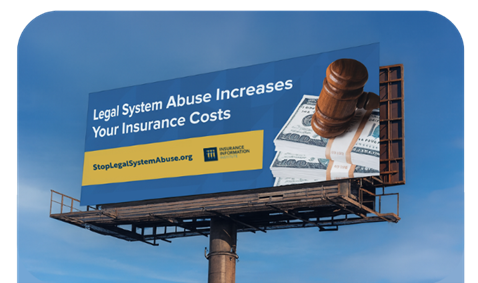
Over the past several weeks, brick-and-mortar highway billboards and digital displays have appeared in areas of Missouri, Oklahoma, and Wisconsin. This follows the campaign’s February expansion into California and Illinois. Kicked off in 2024 in the Capitol District of Atlanta, the campaign also includes a dedicated online consumer-education resource:  StopLegalSystemAbuse.org and targeted social media messaging.

By demonstrating the direct link between lawsuit abuse and increased insurance premiums, Triple-I aims to catalyze legislative action and economic relief.

 “We have already seen how meaningful tort reform in states like Florida, Georgia, and Louisiana can stabilize the insurance market and provide direct financial relief to consumers,” said Triple-I CEO Sean Kevelighan. “Triple-I remains committed to educating lawmakers and the public on the high cost of legal system abuse, addressing the critical issue of affordability for families, and driving legislative progress that restores balance to the national economy.”

The pain is real

Affordability – including insurance costs – is a nationwide issue, and consumers’ pain is real. Unfortunately, many legislative proposals aimed at easing that pain would have the opposite effect.  As Bloomberg warned in a January 2026 editorial, policymakers should resist politically popular but “simplistic solutions, such as capping premiums, subsidizing homebuyers, or punishing investors.”

Instead, it recommends taking steps to increase investment in catastrophe resilience and mitigate cost drivers like legal system abuse.

“In many states,” the editorial said, “underwriters must contend with laws that favor plaintiffs, outsized jury awards, and a proliferation of funds that specialize in financing lawsuits. Research suggests that such costs have been the single biggest driver of premium increases in recent years.”

Also feeding higher premiums are increased replacement costs related to inflation.

Model what’s working

As policymakers seek ways to address these influences, it’s important to learn from states that are succeeding. Florida has a long history of man-made problems caused by insurance fraud and litigation abuse that have contributed to upward pressure on insurance rates. More recently, the state’s legislative reforms to address fraud and tort reform have made the Sunshine State a national model for getting at the root causes of high premiums, instead of merely treating the symptoms.

Since reforms were enacted following a 2022 special session of the Florida Legislature, nearly 20 new property insurers have entered the state and existing carriers have expanded their market share, driving renewed private competition. That shift has facilitated a deep reduction in the number of policies administered by Citizens Property Insurance Corp. – the state-run insurer of last resort.

Other states would do well to pay attention to Florida’s blueprint and learn from these and other successes.

Learn More:

Lessons for Texas in Florida Legal Reforms

Florida Premiums Drop Amid Post-Reform Stability

Uber Joins Effort to Drive Legal System Reform

Legal System Abuse, Artificial Intelligence Cloud 2026 Outlook

Claims Leaders Take Charge on Climate-Resilient Rebuilding

Triple-I Legal System Abuse Awareness Campaign Enters California, Illinois

Take Care in Addressing Homeowners’ Premiums, Bloomberg Cautions Policymakers

New York Among Least Affordable States for Auto Insurance

Louisiana Auto Insurance Rates Benefit From Declines in Frequency, Severity

Inflation, Replacement Costs, Climate Losses Shape Homeowners’ Insurance Options

Uber Joins Effort to Drive Legal System Reform

By Lewis Nibbelin, Research Writer, Triple-I

Ridesharing platforms like Uber are as vulnerable as other businesses to the cost impacts of legal system abuse – costs that inevitably are passed along to their customers. The company reported a more than 50 percent increase in its ride insurance costs per trip in recent years, despite also recording a lower rate of overall crashes from 2017 to 2022.

Passengers see these costs reflected in trip prices, with insurance accounting for roughly 10 percent of the average rider fare nationwide, or as high as 47 percent in costlier areas like Los Angeles County.

“Insurance for us is the second-highest operating cost after payment to drivers,” said Adam Blinick, Uber’s senior director of public policy and communications, in a recent Executive Exchange interview with Triple-I CEO Sean Kevelighan. “It’s been a bit of a calling card to get more aggressive on litigation and being public about where we see the abuse.”

Coordinated attorney outreach helps fuel the trend. Among motor accident victims surveyed by Protecting American Consumers Together, attorneys contacted 92 percent after their accident, including 57 percent who reported they were contacted by more than one. Solicitation typically occurred within a week of the incident, or “before insurance can play a part in addressing someone’s concerns,” Blinick noted.

“This creates more avenues to push people into these mills and artificially inflate the value of claims,” he said.

Third-party litigation funders play a major role in recruiting claimants. Though lack of transparency surrounding the market conceals its true size, a recent report from the National Insurance Crime Bureau and 4WARN estimates third-party funders spent more than $380 million on online search ads alone between June 2024 and June 2025, with some engaging in brand impersonation and search engine manipulation to mislead consumers and extend litigation.

Research from Triple-I and the Casualty Actuarial Society (CAS) estimates excessive litigation added $231.6 billion to $281.2 billion in liability insurance losses from 2015 to 2024, a finding that economic inflation alone cannot explain. A separate Triple-I report on civil case filings reinforces the finding, revealing approximately $42.8 billion in excess litigation value from motor vehicle tort cases filed between 2014 and 2023 in the federal and state civil courts.

“That’s a drop in the bucket to the reality of the problem,” Kevelighan said, “because less than 10 percent of cases had judgments. Others were settled and we can’t necessarily track the settlement data.”

Blinick discussed how uninsured and underinsured motorist (UM/UIM) insurance limits can also attract high claim volumes and disputes, particularly for the rideshare industry. Multiple states require ridesharing businesses to pay $1 million or more for such coverage, with limits in New York set at $1.25 million. Though intended to provide relief for policyholders hit by UM or UIM, these requirements mean bad actors stand to win more from claims, incentivizing excessive lawsuits and fraud.

Staged crashes generate many such claims, with some schemes involving a network of rideshare passengers who are “tied to the law firm, the medical providers, the body shops, the lenders themselves… all across the board,” Blinick said.

He added that many offenders “are the same ones who are doing slip and fall claims and mass tort suits against cities and counties. They’re not picky in terms of who they’re going after. They’re going wherever the opportunity presents itself.”

A 2025 California law that went into effect this year aims to help mitigate fraud by reducing the rideshare industry’s UM/UIM coverage limits from $1 million to $300,000 per accident. Uber has also submitted a November 2026 ballot measure that would cap contingency fees and limit medical damages in vehicle accident cases within the state, as well as shown support for New York’s 2027 budget proposals to combat fraud and unnecessary litigation.

Learn More:

Triple-I Legal System Abuse Awareness Campaign Enters California, Illinois

New York Among Least Affordable States for Auto Insurance

Claims Severity Drives Liability Insurance Losses

Revealing Hidden Cost to Consumers of Auto Litigation Inflation

Litigation Reform Works: Florida Auto Insurance Premium Rates Declining

New Consumer Guide Highlights Economic Impact of Legal System Abuse and Need for Reform

IRC Report Reveals One in Three Drivers Were Either Uninsured or Underinsured in 2023

Legal System Abuse, Artificial Intelligence Cloud 2026 Outlook

By Lewis Nibbelin, Research Writer, Triple-I

Though U.S. economic growth in the coming year remains strong, an ongoing rise in legal system abuse and emerging AI trends may challenge that outlook, according to Chubb chairman and CEO Evan Greenberg in a recent letter to shareholders.

Describing the 2026 market outlook as a “mixed picture,” Greenberg explained that, despite growth drivers like innovation investments and federal deregulation efforts, these gains face challenges from the “cancer” of excessive litigation, which raises costs on “just about everything – transportation, food, construction, insurance and more.” Such expenses amount to an average “tort tax” of $4,000 annually per household, Greenberg argued, and inflate liability insurance costs up 7 percent to 9 percent a year.

“The trial bar is a money-making growth industry, and it continues to expand as lawyers search for new theories of liability to bring more lawsuits,” Greenberg said, adding that third-party litigation funders (TPLF) help turn “courtroom payouts into a speculative asset class.”

Florida has made substantial progress in mitigating these costs through its 2022 and 2023 reforms, contributing to a $4.2 billion increase in business activity and the creation of more than 29,000 jobs, the Perryman Group estimates. Several states, including Georgia, Louisiana, and New York, have also enacted legislation establishing greater oversight of TPLF, spurring similar legislative momentum on a federal level.

Greenberg emphasized the need for continued reforms as courtroom imbalances persist nationwide, noting “it will be a long fight” before policyholders begin to see their impact on insurance premiums and other costs.

Accommodating a digital age

Rapid advancements in AI have bolstered productivity “in all aspects of the underwriting and claims processes,” Greenberg said, facilitating deeper insights, improved customer experiences, and new product innovations. Integrating AI into the insurance industry, however, poses unique hurdles, particularly as companies grapple with an expanding talent gap.

AI adoption can help attract professionals who may otherwise overlook the industry, but upskilling and reskilling current employees is essential to push adoption forward. By investing in AI skill development, such expertise can be paired with “business professionals and managers who know intimately how the business works and what’s required for change,” Greenberg explained.

While any major tech transformation demands “iterative, gritty work,” Greenberg reiterated “the stronger our competitive profile, the more we will grow, which means more employment over time with higher productivity. And remember, when it comes to most insurance, people still want to deal with people. It’s a trust business.”

Learn More:

Triple-I Legal System Abuse Awareness Campaign Enters California, Illinois

Resilient U.S. P/C Market Performance Sets Stage for a Complex 2026

PWC: A.I. Megadeals Spur Insurance M&A Growth

Allstate, Aspen Initiative Seeks to Ease Trust Gap

Tech — Especially A.I. — Is Top of Mind for Global Insurance Executives

Bridging the Short-Term Rental Coverage Gap

By Lewis Nibbelin, Research Writer, Triple-I

As short-term rentals grow increasingly popular, many hosts remain unaware of the added complexity and often higher costs of properly insuring them, according to Triple-I’s latest Outlook.

Though coverage needs will vary, standard homeowners’ insurance policies typically exclude losses from commercial activity, which encompasses a broader range of risks with higher corresponding premiums, the report explains. Because short-term rentals fall under commercial use, rental owners who fail to update their existing policies may face denied claims, reduced liability coverage, higher deductibles, and other serious consequences.

Operating short-term rentals in two-unit or multi-unit dwellings compounds these concerns, as uncovered incidents affect the master insurance policy shared by both the rental unit owner(s) and their neighbors. In such instances, losses can impact the policy terms, conditions, exclusions, and premiums for all residents.

Across single and multi-unit dwellings, commercial activity may violate the permit requirements and operational restrictions set by state and local laws, leading to further policy limitations and potentially cancellation or nonrenewal, the report notes. While short-term rentals most directly increase liability exposure, such policy changes may also impact coverage for physical loss or damage, content loss or damage, and loss of use.

For homeowners planning to rent out their residences, the report outlines the following steps to maintain coverage and remain adequately protected:

  • Notify their insurer: Before operating the rental, owners must contact their insurance carrier, broker, or agent, including the master policy insurance carrier if the dwelling is multi-unit.
  • Comply with policy terms: Rental owners must adhere to their existing homeowners’ policy terms, conditions, and exclusions for short-term rentals, including any restrictions on number of guests and days or nights for rental use.
  • Obtain appropriate coverage: Depending on individual circumstances, rental owners may purchase commercial property insurance, small business insurance, or short-term rental-specific coverages to protect against the commercial risks of short-term rental use. In multi-unit dwellings, all unit owners must collectively purchase new coverage.

Many insurance carriers offer short-term rental endorsements or allow rental periods on standard homeowners’ policies, though restrictions still apply. Consulting with an insurance professional to understand available coverage options is crucial to meeting the specific needs of a given rental unit.

Triple-I’s new Outlook builds on testimony from Triple-I Chief Economist and Data Scientist Dr. Michel Léonard to New York City committee members last year as they considered legislation to expand homeowners’ ability to earn income through short-term rentals. Léonard discussed the potential insurance challenges of the expansion, focusing on the pervasive protection gap among residents using their homes for commercial purposes. Neither bill successfully made it past the city council.

Learn More:

Triple-I Chief Economist Testifies on NYC Measure on Short-Term Rentals

Triple-I Testifies on New York Insurance Affordability

Take Care in Addressing Homeowners’ Premiums, Bloomberg Cautions Policymakers

Insurance Affordability, Availability Demand Collaboration, Innovation

Triple-I Issues Brief: Homeowners Insurance (Members-Only)

Triple-I Legal System Abuse Awareness Campaign Enters California, Illinois

By Lewis Nibbelin, Research Writer, Triple-I

As part of its continuing effort to highlight the impacts of legal system abuse, Triple-I has launched public awareness campaigns on the need for legal reforms in Los Angeles, Calif., and Cook County, Ill., which includes Chicago. The campaigns comprise brick-and-mortar billboards and digital scapes in high-traffic areas across both regions, all of which promote Triple-I’s updated StopLegalSystemAbuse.org microsite.

California and Illinois are perennial members of the American Tort Reform Foundation’s (ATRF) annual list of “judicial hellholes,” or jurisdictions where the organization believes legal system abuse runs rampant. Los Angeles topped its most recent list due to frequent nuclear verdicts and “novel theories of product and environmental liability” to the disadvantage of defendants, ATRF says, with Cook County ranked seventh.

A consumer guide co-authored by Triple-I and Munich Re outlines how such practices fuel rising insurance premiums and other cost burdens throughout the country, to the tune of $6,664 in added annual costs for an American family of four and 4.8 million in jobs lost nationwide. Per resident, these annual costs amount to $2,566.70 in California and just over $2,000 in Illinois, with both states losing hundreds of thousands of jobs every year.

Billboard lawyers blur reality

Attorney advertising often obfuscates this reality, implying plaintiffs win big rather than receive only a fraction of awarded damages. Triple-I’s most recent Issues Brief on legal system abuse notes that legal service providers spent $2.5 billion on millions of ads in 2024 largely to tout this messaging, which research suggests increases the number of plaintiffs in multidistrict litigation (MDL), or large, complex lawsuits consisting of multiple civil cases in different districts.

Additional research from Triple-I and the Casualty Actuarial Society (CAS) estimates that excessive litigation drove $231.6 billion to $281.2 billion in increased liability insurance losses from 2015 to 2024, a finding that economic inflation alone cannot explain. A separate Triple-I report on civil case filings reinforces the trend, revealing an estimated $42.8 billion in excess litigation value from motor vehicle tort cases filed between 2014 and 2023 in the federal and state civil courts.

Gaining momentum

Triple-I’s new campaigns build on the momentum of its parallel efforts in Georgia and Louisiana, where state lawmakers successfully passed sweeping legal system abuse reforms last year. Both states, for instance, have established greater oversight of third-party litigation funding to prevent outside investors from gaming the court system for profit. Though the reforms remain too recent to fully affect premiums, legal reforms in Florida model the kinds of subsequent market improvements these states can later expect.

Families and businesses across the country are grappling with rising costs. By distorting loss trends and propelling claims expenses, unnecessary and drawn-out litigation serves only to exacerbate the strain. Addressing these pressures requires ongoing dialogue between regulators, consumers, industry leaders, and other stakeholders to ensure fairness in the court system while supporting a stable insurance environment that keeps coverage accessible.

Learn More:

Take Care in Addressing Homeowners’ Premiums, Bloomberg Cautions Policymakers

Revealing Hidden Cost to Consumers of Auto Litigation Inflation

Litigation Reform Works: Florida Auto Insurance Premium Rates Declining

New Consumer Guide Highlights the Economic Impact of Legal System Abuse and the Need for Reform

Triple-I Brief Highlights Legal System Abuse and Attorney Advertising

Significant Tort Reform Advances in Louisiana

New Triple-I Issue Brief Puts the Spotlight on Georgia’s Insurance Affordability Crisis

New York Among
Least Affordable States for Auto Insurance

By Lewis Nibbelin, Research Writer, Triple-I

New Yorkers pay the fourth-highest personal auto expenditures in the United States, costing households an average of $1,935 in 2024, or 2.23 percent of the state’s median household income, according to Triple-I’s latest Affordability Outlook.

Up from New York’s average of $1,753 in 2023, Triple-I’s estimates reflect the burgeoning toll of several expenditure cost drivers in the Empire State, many of which are structural factors beyond the insurance industry. Citing data from the Insurance Research Council (IRC) – like Triple-I, an affiliate of The Institutes – the report highlights four cost drivers that rank among the highest in the country, including:

  • Repair costs: New York has the third-highest auto repairs costs in the United States, at $864 more than the national average;
  • Carrier expense index: New York has the third-highest carrier expense index for personal auto insurance, at 14.9 percent of losses;
  • Injury claim costs: New York has the third-highest average injury claim severity in the country, at more than twice the national average; and
  • Accident frequency: New York has the eighth-highest average frequency of personal auto accidents in the nation, at 3.09 accidents.

While traffic density, road conditions, and driver education can contribute to accident frequency and severity, excessive and fraudulent claims litigation also fuel rising auto insurance premiums and overall costs in the state. Wiping out billions of dollars in U.S. economic activity annually, legal system abuse costs New York residents 427,794 jobs and $7,027 for each household per year, earning the state a recurring spot on the American Tort Reform Foundation’s list of “judicial hellholes.”

A surge in staged crashes underpins these figures, leaving drivers increasingly vulnerable to fraudulent damage or injury claims. Such incidents – totaling 1,729 in New York in 2023 – keep upward pressure on auto rates for all policyholders, inflating average auto premium by as much as $300 per year, Triple-I estimates.

To alleviate these cost burdens, a package of state budget proposals was recently unveiled to secure $2 million in funding for investigations into alleged auto fraud and introduce new regulations that extend the timeframe for carriers to report suspicious claims. Another law would cap pain and suffering damages awarded to drivers who engaged in criminal behavior, such as those who were uninsured at the time of the incident.

New York policymakers also passed legislation last month aimed at third-party litigation funding (TPLF), or funding from often anonymous investors who can delay prompt settlements in exchange for a share of larger damage awards, thereby propelling claims costs. Though falling short of mandating TPLF disclosure during litigation, the new law parallels effective tort reforms in other states, offering hope toward insurance market stability.

Homeowners insurance holds steady

Conversely, New York’s homeowners insurance premiums “are relatively average and reasonable as a percentage of household income,” contradicting “the narrative of an affordability crisis in New York’s homeowners insurance market,” said Patrick Schmid, Triple-I’s chief insurance officer, in written testimony to state lawmakers.

With a 2.11 percent ratio of homeowners insurance expenditure to median household income, New York ranks 29th in an affordability study by the IRC, suggesting property and replacement costs contribute to the state’s housing affordability issues.

Policy interventions in insurance markets “would address a symptom rather than the cause” of such issues, Schmid stressed, urging lawmakers to focus instead on improving building material and labor costs; litigation trends; and other inflationary pressures.

While the specific policy levers may differ, Florida’s legal reforms in 2022 and 2023 led to 17 new insurance companies entering the state and rate reductions for dozens of homeowners and auto insurers, including a 6.5 percent average rate decrease for the state’s top five personal auto insurers in 2025.

Once a “poster child” for legal system abuse, Florida’s success demonstrates the need for continued reform in 2026 to promote a more competitive insurance market and greater affordability for consumers.

Learn More:

Triple-I Testifies on New York Insurance Affordability

Florida Governor Touts Auto Insurance Rebates, Tort Reform Success

Litigation Reform Works: Florida Auto Insurance Premium Rates Declining

Insurance Affordability, Availability Demand Collaboration, Innovation

Disasters, Litigation Reshape Homeowners’ Insurance Affordability

La. Auto Insurance Rates Benefit From Declines
in Frequency, Severity

By Lewis Nibbelin, Research Writer, Triple-I

More than 20 requests for auto insurance rate decreases have been filed with Louisana’s Department of Insurance by insurers since mid-2025. According to the department, the decreases were driven by reductions in accident frequency and severity.

“I’m glad to see positive movement on auto rates in Louisiana for the first time in years,” said Louisiana Insurance Commissioner Tim Temple. “Because fewer accidents are contributing to these lower losses for insurers, we should not necessarily expect to see this level of decrease in future years unless we continue to pursue legal reform that addresses the foundational reasons our rates are the highest in the country.”

Temple said he hopes for further rate changes as the market continues to stabilize, citing Florida’s recent premium reductions after sweeping tort reform legislation in 2022 and 2023.

Longstanding affordability challenges

Among those who filed for rate decreases include Louisiana’s largest auto insurers, with the latest reductions impacting nearly 470,000 Progressive policyholders, or roughly 23.5 percent of the state’s auto market. More than one million State Farm policies also achieved lower average rates implemented this month.

While the statewide decreases can offer relief for drivers in one of the least affordable states for auto insurance, Temple cautioned that rates for individual policyholders will differ based on personal risk factors, urging consumers to shop among the “30 companies that have taken a rate decrease.”

The announcement arrives less than a year after Louisiana lawmakers passed a 2025 tort reform package to curb excessive lawsuits and a rate of bodily injury claims more than twice the national average. Beyond fueling higher insurance premiums in the state, such practices generate an annual $965 “tort tax” on every Louisianan and cost over 40,562 jobs per year, as highlighted by Triple-I’s consumer awareness campaign to build support for the reforms.

Other 2025 legislative measures, however, stipulate increased regulatory intervention in rate-setting, which can create further strain on an insurance market just beginning to recover. Another bill targeting nuclear verdicts (awards of $10 million or more) also failed to pass, playing a role in the state’s recurring spot on the American Tort Reform Foundation’s annual list of “judicial hellholes.”

Noting that reduced accident frequency contributed to the rate changes, Temple said in a statement that “we should not necessarily expect to see this level of decrease in future years unless we continue to pursue legal reform that addresses the foundational reasons our rates are the highest in the country.”

Lessons from Florida

Measurable benefits from Louisiana’s existing reforms may require a few more years to unfold, Temple added, based on the trajectory of similar legislation in Florida. In 2022, Florida accounted for over 70 percent of the nation’s homeowners claim-related litigation, despite representing only 15 percent of homeowners’ insurance claims, according to the state’s Office of Insurance Regulation (OIR). State legislators responded to the crisis with several tort laws that, among other things, eliminated one-way attorney fees and assignment of benefits (AOB) for property insurance claims.

Under the reforms, 17 new insurance companies have entered the Sunshine State and dozens of homeowners’ and auto insurers have filed for rate decreases, with Citizens Property Insurance – the state’s insurer of last resort – approved for major average rate cuts this spring, according to a recent announcement from Florida Gov. Ron DeSantis.

A 50 percent drop in Citizens policies in 2025 helped facilitate the cuts, reflecting the largest transition of policies back to the private market in a decade. Later that year, additional cost-savings achieved through the reforms helped state regulators secure nearly $1 billion in premium refunds for Progressive auto insurance policyholders in the state.

Though the specific policy levers may differ, Florida’s reforms continue to model the kinds of market improvements that states like Louisiana and Georgia can expect after successfully passing their own tort legislation. State government moves like these are essential to eradicating legal system abuse and keeping insurance affordable and available, especially as legislative challenges to legal reform persist.

“Premiums are lowering because we’ve enacted real reforms and withstood the pressure to reverse course,” DeSantis said. “We will hold firm in our commitment not to go back to the broken insurance market of the past.”

Learn More:

Significant Tort Reform Advances in Louisiana

Florida Governor Touts Auto Insurance Rebates, Tort Reform Success

Litigation Reform Works: Florida Auto Insurance Premium Rates Declining

Louisiana Senator Seeks Resumption of Resilience Investment Program

Louisiana Reforms: Progress, But More Is Needed to Stem Legal System Abuse

Who’s Financing Legal System Abuse? Louisianans Need to Know