

By Lewis Nibbelin, Research Writer, Triple-I
Despite a relatively mild Atlantic hurricane season, the United States reported another costly year of natural catastrophe events in 2025, driven largely by the $51 billion in annual insured losses from severe convective storms, according to Gallagher Re estimates.
Trailing behind only 2023 and 2024 in such losses, the year ranks as the third costliest on record for the peril, producing more than $68 billion in total economic damages. A new Triple-I Issues Brief examines the demographic shifts and evolving weather and climate patterns behind the devastation, particularly as convective storm activity increasingly impacts dense urban areas.
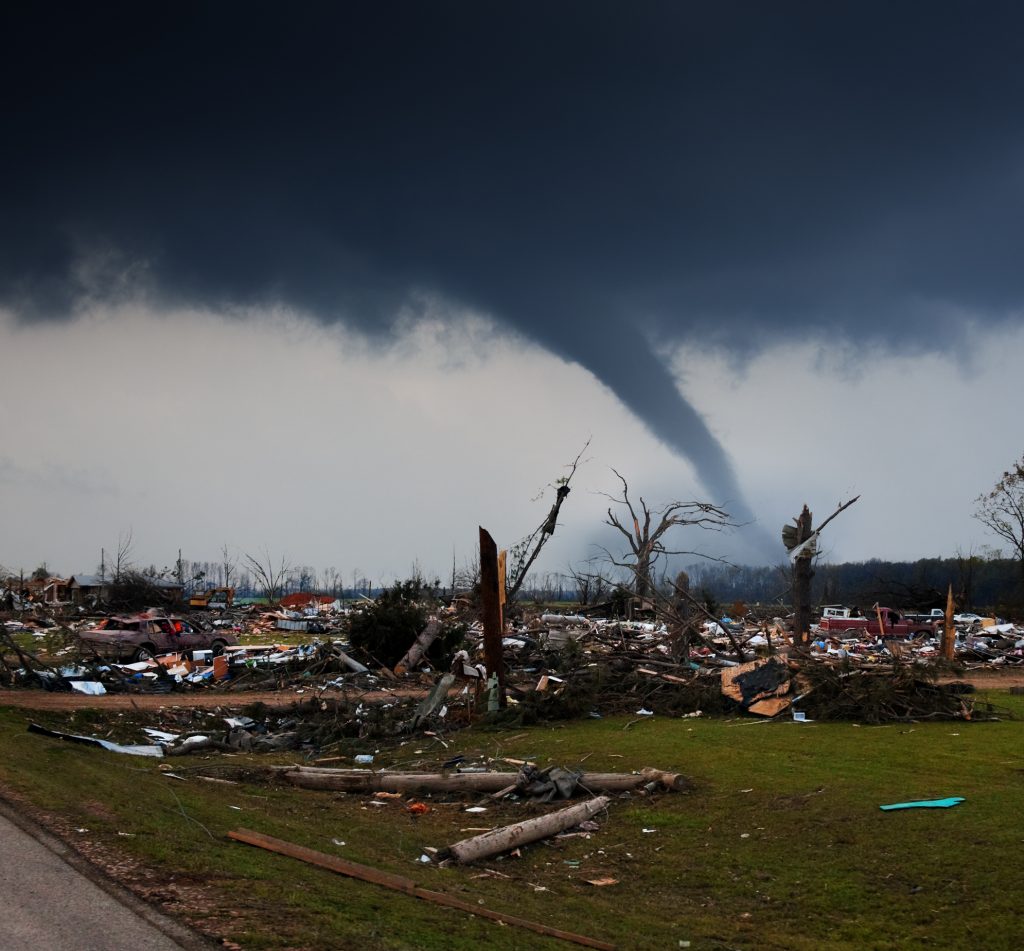
Tornado activity surges
Preliminary data from the National Oceanic and Atmospheric Administration (NOAA) indicates at least 1,559 tornadoes were reported in 2025, roughly 127 percent of the annual 1,225 historical average. Though advancements in doppler radar and other technologies have improved observations, some climate experts suggest activity has become increasingly concentrated in outbreaks of days with multiple tornadoes.
A record 300 twisters spawned in March alone, with more than 100 confirmed across 15 states during mid-month. Generating $8.4 billion in insured losses, the early season outbreak is the fourth costliest of its kind on record and led to two EF4 tornadoes in Arkansas, the first time in decades that such a convergence had been reported.
Hail takes center stage
Hail accounts for as much as 80 percent of severe convective storm claims in any given year, causing an estimated $10 billion in annual U.S. property damage for more than a decade. Roofs bear the brunt of this damage, facilitating an estimated 70 to 90 percent of total insured residential catastrophic losses.
To better understand hail formation and impact, Victor Gensini – Northern Illinois University meteorology professor and Triple-I non-resident scholar – recently co-led the largest hail study ever conducted, known as ICECHIP. Funded with an $11 million grant from the U.S. National Science Foundation, the field study sent more than 100 scientists across the Great Plains to analyze hailstorms during summer 2025. The Insurance Institute for Business and Home Safety also participated, as part of its ongoing efforts to develop severe weather-resilient construction standards.
Partners in resilience
Every $1 spent on hazard mitigation can save up to $33 in future disaster costs, according to a report from the U.S. Chamber of Commerce and Allstate. Modern building codes are essential to achieving these outcomes, as is leveraging tools like aerial imagery and artificial intelligence to help predict and prevent losses before they occur.
Numerous private sector nonprofits have also stepped up to fill in research and mitigation gaps left by various federal funding and staffing cuts last year. Climate Central, for instance, has released its first billion-dollar weather and climate disaster report since assuming responsibility for that dataset last year from NOAA, reporting 21 such events from severe convective storms alone, more than any prior year on record.
Learn More:
Claims Leaders Take Charge on Climate-Resilient Rebuilding
Climate Nonprofits Take Responsibility for Terminated U.S. Databases
Industry, Universities Team Up to Study Convective Storms
Storm-Resistant Roof Efforts Gain Ground
Resilience Investment Payoffs Outpace Future Costs More Than 30 Times