As work continues to address the harm inflicted by Hurricane Helene, researchers at Colorado State University (CSU) warn that the next two weeks “will be characterized by [tropical storm] activity at above normal levels.”
The CSU researchers define “above normal” by accumulated cyclone energy (ACE) of more than 10. This level of hurricane intensity has been reached in less than one-third of two-week periods in early October since records have been kept.
Hurricane Kirk, they wrote, is “extremely likely” to generate more than 10 ACE during its lifetime in the eastern/central Atlantic. Tropical Depression 13 has just formed and is likely to generate considerable ACE in its lifetime across the Atlantic. The National Hurricane Center is monitoring an additional area for formation in the Gulf of Mexico that should be monitored for potential U.S. impacts.
“Hurricane Kirk is forecast to track northwestward across the open Atlantic over the next few days, likely becoming a powerful major hurricane in the process,” said CSU research scientist and Triple-I Non-resident Scholar Phil Klotzbach. “The system looks to generate approximately an additional 20 ACE before dissipation, effectively guaranteeing the above-normal category for the two-week period.”
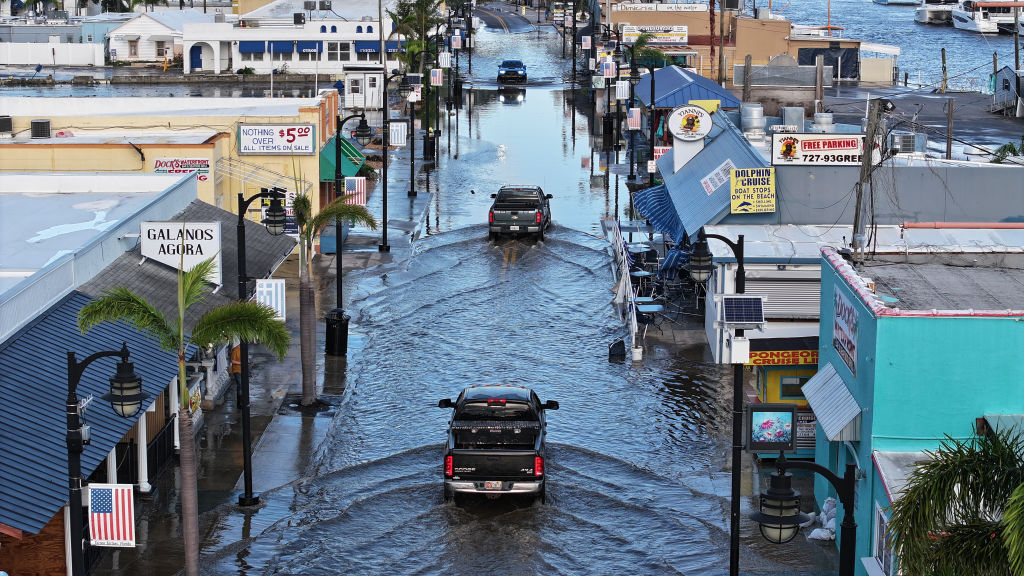
With more than 160 people confirmed dead in Florida, Georgia, South Carolina, North Carolina, Virginia, and Tennessee, Helene is now the second-deadliest hurricane to strike the mainland United States in the past 55 years, topped only by Hurricane Katrina in 2005.
Reinsurance broker Gallagher Re predicts that private insurance market losses from Helene will rise to the mid-to-high single-digit billion dollar level, higher than its pre-landfall forecast of $3 billion to $6 billion, according to Chief Science Officer and Meteorologist Steve Bowen.
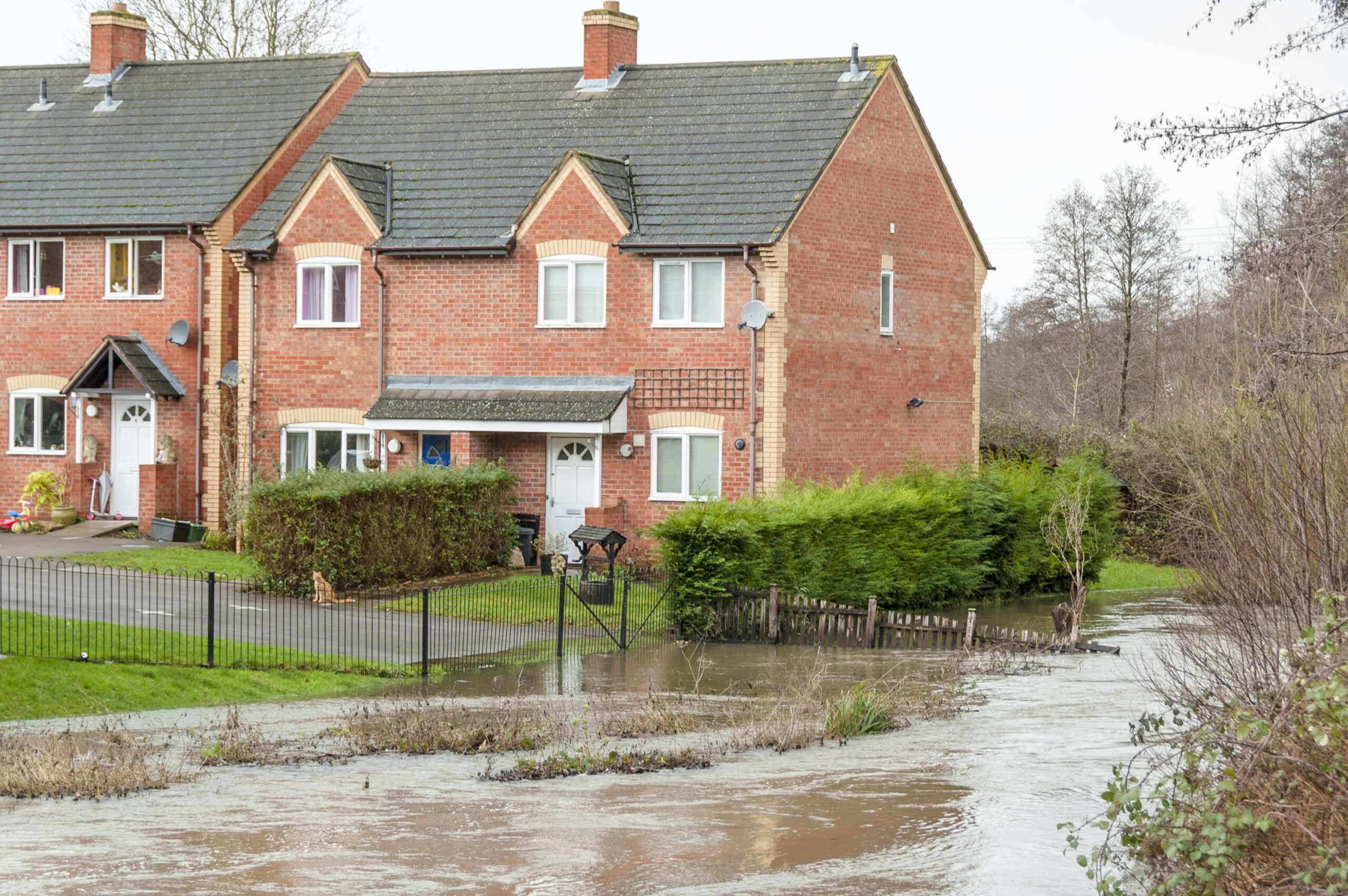
As always – and with particular urgency in the wake of Helene’s devastation – Triple-I urges everyone in hurricane-prone areas to stay informed, be prepared, and follow the instructions of local authorities. We also ask that people be mindful of the potential for flood danger far inland, as reflected in the experiences of many non-coastal communities during Hurricane Ida and Helene.
By Michel Léonard, Ph.D., CBE, Chief Economist and Data Scientist, Triple-I
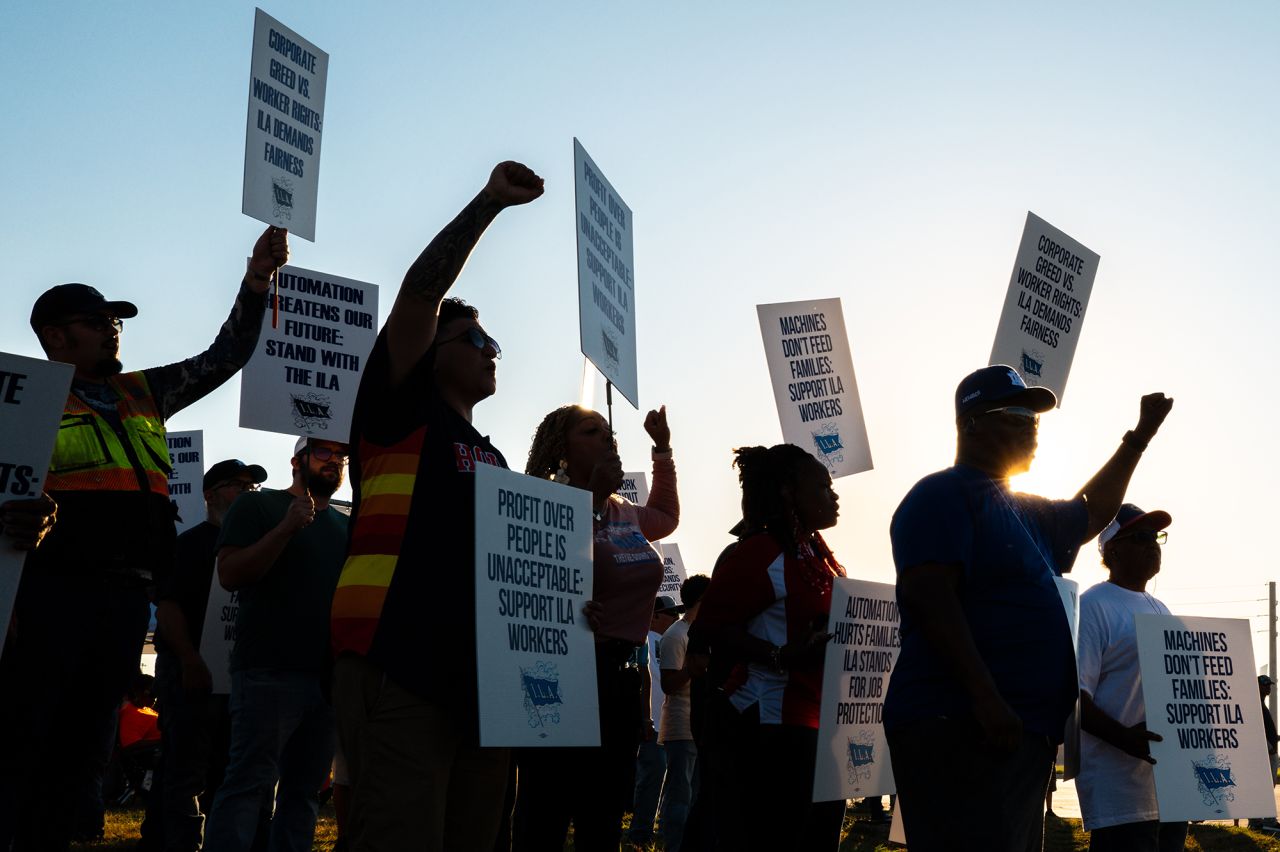
The International Longshoremen’s Association (ILA) went on strike on Tuesday, Oct 1. The strike is expected to affect more than 20 ports along the Eastern Seaboard and Gulf Coast, including the ports of New York and New Jersey, Baltimore and Houston.
Focusing specifically on the strike’s impact on the property/casualty industry – and given the specific goods transiting through those ports – the impact will be most direct for homeowners, personal and commercial auto, and commercial property. More specifically, the strike may lead to increased replacement costs and delays in the supply and replacement of homeowners’ content, such as garments and furniture; of European-made vehicles and vehicle replacement parts; and of concrete, especially for commercial construction.
However, the strike’s impact will be significantly mitigated by current inventories for each of the impacted insurable goods and the tightness of related just-in-time supply chains. At minimum, Triple-I estimates, the strike would have to last one to two weeks to trigger further sustained increases in P/C replacement costs or accelerate a current slowdown in P/C underlying growth.
Another way the insurance industry would be affected is from losses from coverage protecting against adverse business costs of events, such as strikes. These coverages include, but are not limited to, business interruption, political risk, credit, supply-chain insurance, and some marine and cargo. However, most such policies have waiting periods ranging from five to 10 days, and then deductibles, before payment is triggered. As a result, losses for those lines are likely to be limited if the strike lasts less than one to two weeks.
Using a one to two-week timeline is helpful: The last major longshoremen’s strike in the United States – at the port of Long Beach, Calif., in 2021 – lasted one week.
The Casualty Actuarial Society (CAS) has added to its growing body of research to help actuaries detect and address potential bias in property/casualty insurance pricing with four new reports. The latest reports explore different aspects of unintentional bias and offer forward-looking solutions.
The first – “A Practical Guide to Navigating Fairness in Insurance Pricing” – addresses regulatory concerns about how the industry’s increased use of models, machine learning, and artificial intelligence (AI) may contribute to or amplify unfair discrimination. It provides actuaries with information and tools to proactively consider fairness in their modeling process and navigate this new regulatory landscape.
The second new paper — “Regulatory Perspectives on Algorithmic Bias and Unfair Discrimination” – presents the findings of a survey of state insurance commissioners that was designed to better understand their concerns about discrimination. The survey found that, of the 10 insurance departments that responded, most are concerned about the issue but few are actively investigating it. Most said they believe the burden should be on the insurers to detect and test their models for potential algorithmic bias.
The third paper – “Balancing Risk Assessment and Social Fairness: An Auto Telematics Case Study” – explores the possibility of using telematics and usage-based insurance technologies to reduce dependence on sensitive information when pricing insurance. Actuaries commonly rely on demographic factors, such as age and gender, when deciding insurance premiums. However, some people regard that approach as an unfair use of personal information. The CAS analysis found that telematics variables –such as miles driven, hard braking, hard acceleration, and days of the week driven – significantly reduce the need to include age, sex, and marital status in the claim frequency and severity models.
Finally, the fourth paper – “Comparison of Regulatory Framework for Non-Discriminatory AI Usage in Insurance” – provides an overview of the evolving regulatory landscape for the use of AI in the insurance industry across the United States, the European Union, China, and Canada. The paper compares regulatory approaches in those jurisdictions, emphasizing the importance of transparency, traceability, governance, risk management, testing, documentation, and accountability to ensure non-discriminatory AI use. It underscores the necessity for actuaries to stay informed about these regulatory trends to comply with regulations and manage risks effectively in their professional practice.
There is no place for unfair discrimination in today’s insurance marketplace. In addition to being fundamentally unfair, to discriminate on the basis of race, religion, ethnicity, sexual orientation – or any factor that doesn’t directly affect the risk being insured – would simply be bad business in today’s diverse society. Algorithms and AI hold great promise for ensuring equitable risk-based pricing, and insurers and actuaries are uniquely positioned to lead the public conversation to help ensure these tools don’t introduce or amplify biases.
Every major technological advancement prompts new ethical concerns or shines a fresh light on existing ones. Artificial intelligence is no different in that regard. As the property/casualty insurance industry taps the speed and efficiency generative AI offers and navigates the practical complexities of the AI toolset, ethical considerations must remain in the foreground.
Traditional AI systems recognize patterns in data to make predictions. Generative AI goes beyond predicting – it generates new data as its primary output. As a result, it can support strategy and decision making through conversational, back-and-forth “prompting” using natural language, rather than complicated, time-consuming coding.
A recently published report by Triple-I and SAS, a global leader in data and AI, discusses how insurers are uniquely positioned to advance the conversation for ethical AI – “not just for their own businesses, but for all businesses; not just in a single country, but worldwide.”
AI inevitably will influence the insurance sector, whether through the types of perils covered or by influencing how insurance functions like underwriting, pricing, policy administration, and claims processing and payment are carried out. By shaping an ethical approach to implementing AI tools, insurers can better balance risk with innovation for their own businesses, as well as for their customers.
Conversely, failure to help guide AI’s evolution could leave insurers — and their clients — at a disadvantage. Without proactive engagement, insurers will likely find themselves adapting to practices that might not fully consider the specific needs of their industry or their clients. Further, if AI is regulated without insurers’ input, those regulations could fail to account for the complexity of insurance – leading to guidelines that are less effective or equitable.
“When it comes to artificial intelligence, insurers must work alongside regulators to build trust,” said Matthew McHatten, president and CEO of MMG Insurance, in a webinar introducing the report. “Carriers can add valuable context that guides the regulatory conversation while emphasizing the value AI can bring to our policyholders.”
During the webinar, Peter L. Miller, CPCU, president and CEO of The Institutes, noted that generative AI already is helping insurers “move from repairing and replacing after a loss occurs to predicting and preventing losses from ever happening in the first place,” as well as enabling efficiencies across the risk-management and insurance value chain.
Jennifer Kyung, chief underwriting officer for USAA, discussed several use cases involving AI, including analyzing aerial images to identify exposures for her company’s members. If a potential condition concern is identified, she said, “We can trigger an inspection or we can reach out to those members and have a conversation around mitigation.”
USAA also uses AI to transcribe customer calls and “identify themes that help us improve the quality of our service.” Future use cases Kyung discussed include using AI to analyze claim files and other large swaths of unstructured data to improve cost efficiency and customer experience.
Mike Fitzgerald, advisory industry consultant for SAS, compared the risks associated with generative AI to the insurance industry’s early experience with predictive models in the early 2000s. Predictive models and insurance credit scores are two innovations that have benefited policyholders but have not always been well understood by consumers and regulators. Such misunderstandings have led to pushback against these underwriting and pricing tools that more accurately match risk with price.
Fitzgerald advised insurers to “look back at the implementation of predictive models and how we could have done that differently.”
When it comes to AI-specific perils, Iris Devriese, underwriting and AI liability lead for Munich Re, said, “AI insurance and underwriting of AI risk is at the point in the market where cyber insurance was 25 years ago. At first, cyber policies were tailored to very specific loss scenarios… You could really see cyber insurance picking up once there was a spike of losses from cyber incidents. Once that happened, cyber was addressed in a more systematic way.”
Devriese said lawsuits related to AI are currently “in the infancy stage. We’ve all heard of IP-related lawsuits popping up and there’ve been a few regulatory agencies – especially here in the U.S. – who’ve spoken out very loudly about bias and discrimination in the use of AI models.”
She noted that AI regulations have recently been introduced in Europe.
“This will very much spur the market to form guidelines and adopt responsible AI initiatives,” Devriese said.
The Triple-I/SAS report recommends that insurers lead by example by developing their own detailed plans to deliver ethical AI in their own operations. This will position them as trusted experts to help lead the wider business and regulatory community in the implementation of ethical AI. The report includes a framework for implementing an ethical AI approach.
LEARN MORE AT JOINT INDUSTRY FORUM
Three key contributors to the project – Peter L. Miller, Matthew McHatten, and Jennifer Kyung — will share their insights on AI, climate resilience, and more at Triple-I’s Joint Industry Forum in Miami on Nov. 19-20.
Analysis based on precise, granular data is key to fair, accurate insurance pricing – and is more important than ever before in an era of increased climate-related risks. In a recent Executive Exchange discussion with Triple-I CEO Sean Kevelighan, a co-founder of Norway-based 7Analytics discussed how his company’s methodology – honed by use in the oil and gas industry – can help insurers identify opportunities to profitably write flood coverage in what might seem to be “untouchable” areas.
7Analytics uses hydrology, geology, and data science to develop high-precision flood risk data tools.
“We are four oil and gas geologists behind 7Analytics,” said Jonas Torland, who also is the company’s chief commercial officer, “and between us we’ve spent 100 years chasing fluids in the very complicated subsurface.”
Torland believes his firm can bring a new level of refined expertise to U.S. insurers seeking to pinpoint pockets of insurability against flood.
“Instead of analyzing faults and carrier beds, we’re now analyzing streams and culverts and changing land-use features,” Torland told Kevelighan. “I think the approach we bring is brilliant for problems related to climate and population migration and urban pluvial flooding in particular.”
Torland said he hopes his company can help close the U.S. flood protection gap by giving private insurers the comfort levels and incentives they need to write the coverage. While more insurers have been covering flood risk in recent years, the National Flood Insurance Program (NFIP) still underwrites the lion’s share of flood risk.
NFIP’s recently reformed pricing methodology, Risk Rating 2.0 – which aims to make the government agency’s premium rates more actuarially sound and equitable by better aligning them with individual properties’ risk – has created concerns among policyholders whose premiums are rising as rates become more aligned with principles of risk-based pricing.
As the cost of participating in NFIP rises for some, it is reasonable to expect that private insurers will recognize the market opportunity and respond by applying cutting-edge data and analytics capabilities and more refined pricing techniques to seize those opportunities. This is where Torland believes 7Analytics can help, and he noted that the company had already had some positive test results in flood-prone Florida.
Kevelighan agreed that solutions like those provided by 7Analytics are what is needed to help private insurers close the flood insurance gap. Insurers are telling Triple-I as much.
“I think we can all agree that the current way we review flood risk is antiquated,” Kevelighan said. “So we’ve got to bring that new technology, that new innovation to begin changing behaviors and changing how and where we develop and how we live.”
By Loretta Worters, Vice President, Media Relations, Triple-I
One in five U.S. children is unsure where they will get their next meal, according to the U.S. Department of Agriculture. In 2022, 33 percent of single-parent families experienced food insecurity, and the problem is especially acute for families of color and households headed by single mothers.
The Insurance Industry Charitable Foundation is observing Hunger Action Month – a nationwide effort held every September– by raising funds in its ongoing fight against childhood hunger throughout its 30th anniversary year in 2024.
On average, IICF provides up to five meals for every dollar contributed, working with 11 nonprofit partners that serve communities across the United States and United Kingdom. Donors to the IICF 30th Anniversary Celebration are recognized on its website as IICF Children’s Champions for contributions of $1,000 or greater and all donors contributing $30 or more.
Donors giving $30 or more can enroll for a complimentary year of IICF Global Membership, which provides exclusive volunteer opportunities and a network of philanthropically minded insurance professionals, noted IICF CEO Bill Ross.
“We convened an IICF 30th Anniversary Committee of 35 industry leaders in the new year to help lead and advance our 30th campaign to raise funds for hungry children,” Ross said. “Seven insurance companies are leading internal company campaigns in support of IICF’s 30th, raising and matching funds for hungry children: CNA, Burns & Wilcox, Falvey Insurance Group, Lockton, Markel, RT Specialty and The Hartford. We hope more companies and individuals will participate.”
The IICF has approximately 400 individual donors to date. For every 100 new donors, at only $30 each, that’s thousands of meals they can deliver to children in need.
“As we look back at 30 years of the IICF, it is encouraging to know we have grown from an effort primarily serving California, with approximately 20 board members, to now expanding as a national and growing international industry foundation with more than 800 insurance professionals, providing personal leadership and volunteer support, serving on IICF’s international and local boards and committees,” said Ross.
“Throughout our 30 years, IICF has maintained a focus on children at risk, education and food insecurity. Each of our divisions encompasses these focus areas, as well as additional areas of need specific to each region, including military veterans, the environment, and social mobility,” he said.
“It is always important to recognize where we started as a foundation, and our vision remains the same today. The IICF is here to represent the insurance industry in a united philanthropic effort by providing grants in local communities, industrywide volunteer service and ongoing opportunities for leadership in our communities and our industry.”
More Work Needs to be Done
Since 2020, IICF has raised $1.8 million and delivered three million meals through its Children’s Relief Fund, which was launched in response to the global pandemic. But more needs to be done. For those that wish to donate, the IICF is grateful to these acts of kindness.
Ross summed it up best: “When we unite to help others, great things happen for everyone – communities, our neighbors in need and our industry!”
Louisiana’s personal auto insurance affordability improved to 2.67 percent of median household income in 2022 – down from 2.93 percent in 2020 – but it retains the dubious distinction of being the least affordable state, Triple-I’s chief insurance officer told the Louisiana House Insurance Committee in recent testimony.
Dale Porfilio – who also is president of the Insurance Research Council (IRC) – said that by nearly every metric the state’s insurance cost drivers are well above the national average:
Accident frequency – Louisiana is 16 percent higher than the national average;
Repair cost severity – Louisiana is 9 percent higher;
Injury claim relative frequency – Two out of every four property damage claims (when cars hit cars) in Louisiana result in bodily injury claims (49 percent), twice the one out of every four (25 percent) across all states;
Medical utilization – Louisiana is 47 percent higher;
Attorney involvement – Louisiana is 24 percent higher;
Underinsured motorists – At-fault drivers in Louisiana have insufficient liability insurance limits in over 35 percent of multi-car accidents, over twice the 16 percent U.S. average; and
Claims litigation – Litigation over personal auto claims in Louisiana is more than twice the national average, surpassed only by Florida.
Porfilio noted that for auto insurance affordability to improve, overall expected losses will need to be reduced. Legislation to reduce one or more of these key cost drivers would be helpful, Porfilio said.
As Triple-I and IRC previously reported, the combination of high insurance expenditures and low median income make Louisiana a difficult state in which to lower costs. The frequency of hurricanes hitting the state increases homeowners insurance costs, and the high cost of reinsurance has contributed to the Louisiana’s insurance woes.
In fact, in 2020 and 2021, in the wake of Hurricane Laura and Hurricane Ida, insurers paid out more than $23 billion in insured losses from over 800,000 claims filed.
While Louisiana policymakers were confident a $45 million fund approved in February 2023 to encourage insurers to write property insurance business in the state would help stabilize the market, insurance commissioner Jim Donelon recognized that the approved grants are only the first step toward reducing homeowners’ insurance rates.
As Porfilio’s testimony demonstrated – and the market has dictated – more work is needed to lower costs for consumers and insurers in Louisiana.
Georgia’s personal auto insurance affordability has significantly worsened over the past decade and a half, making it one of the least affordable states, according to a new report by the Insurance Research Council (IRC) – a division of The Institutes, like Triple-I.
The study, Personal Auto Insurance Affordability in Georgia, ranks the state 47th in terms of auto insurance affordability. Only four other states – Louisiana, Florida, Mississippi, and New York – are less affordable. In 2006, Georgia was the 27th most affordable state.
Personal auto insurance expenditures in Georgia accounted for two percent of the median household income in 2022 (the latest year for which expenditure data is available). This is compared with 1.5 percent nationally.
Key findings:
From the mid-2000s through 2014, Georgians spent about the same on auto insurance as other Americans. In the mid-2010s, however, auto insurance expenditures in Georgia began escalating. Between 2014 and 2022, auto insurance spending in Georgia grew 5.6 percent annualized, compared with 3.3 percent in the country overall and faster than in any other state. In 2022, Georgia’s average expenditure of $1,347 was 20 percent higher than the U.S. average.
Affordability issues in Georgia’s auto insurance market stem from multiple factors — many of which have been faced by the rest of the country — including economic inflation, rising replacement costs, risky driving behavior, and legal system abuse. However, several key cost drivers are higher in Georgia, including propensity to file injury claims, number of underinsured motorists, and claim litigation.
Auto insurance litigation is a growing concern in Georgia, especially as tort reform in neighboring states may be pushing law firms in those states to seek opportunities elsewhere. Georgia has experienced elevated attorney advertising rates, particularly in television advertising.
“Uninsured and underinsured motorists are both a symptom and a cause of affordability issues,” said Dale Porfilio, FCAS, MAAA, president of the IRC. “When affordability deteriorates, whether from increasing costs or slower income growth, increasing numbers of motorists may choose to lower the policy limits or to forgo the mandated insurance completely.”
Porfilio, who is also Chief Insurance Officer of Triple-I, noted that the resulting need for drivers to purchase uninsured motorist (UM) and underinsured motorist (UIM) protection further increases average insurance expenditures.
“Both the UM and UIM rates are higher than average in Georgia,” he said. “The UIM rate is especially high in the state: Georgia’s UIM rate has been increasing steadily and was the third-highest rate in the country in 2022.”
Michigan personal auto insurance affordability improved markedly after enacting substantial auto insurance reform in 2019, according to a new report by the Insurance Research Council (IRC) – like the Triple-I, a division of The Institutes
The study, Personal Auto Insurance Affordability in Michigan, found that personal auto insurance expenditures accounted for 1.9 percent of the median household income in Michigan in 2022 (the last year the data is available), a decline of half-a-percent from the pre-reform peak. Michigan’s expenditure share remains higher than the percentage in the overall U.S. and forty-four other states.
Other key findings from the report include:
Before the reforms, Michigan drivers were required to purchase unlimited personal injury protection (PIP) coverage; in comparison, the second highest mandated amount of PIP coverage was $50,000 in New York. The unlimited medical benefits and other features, such as attendant care benefits and no medical fee schedule, led to Michigan’s extremely high average auto injury claim severity, which has been the primary cost driver in the state.
In 2022, Michigan households spent $1,319 to insure each vehicle, nearly 20 percent above the national average. However, in the years since reform, expenditures have fallen in Michigan while increasing in almost every other state. From 2019 to 2022, the average expenditure for auto insurance in Michigan fell 12 percent compared with an increase of five percent in the U.S. overall.
Uninsured and underinsured motorists are both a symptom and cause of affordability issues. In 2019, Michigan had the highest rate of uninsured drivers in the country, with more than one in four motorists lacking the required liability coverage. The uninsured motorist rate in Michigan dropped by 5 percent between 2020 and 2022.
“Efforts to improve auto insurance affordability in Michigan must begin with the underlying cost drivers: injury claim severity and litigation,” said Dale Porfilio, FCAS, MAAA, president of the IRC. “The average amount paid per auto claim for auto injury insurance is dramatically higher in Michigan, more than double the U.S. average and one and a half times the second highest state.”
Porfilio, who is also Chief Insurance Officer of the Insurance Information Institute (Triple-I), noted that the 2022 affordability data does not fully reflect many recent countrywide challenges to affordability, such as economic inflation, higher replacement costs, legal system abuse, and deteriorating driving behavior. “However, the movement of several key indicators illustrate the positive effect of the Michigan policymakers’ efforts to improve affordability in their state.”
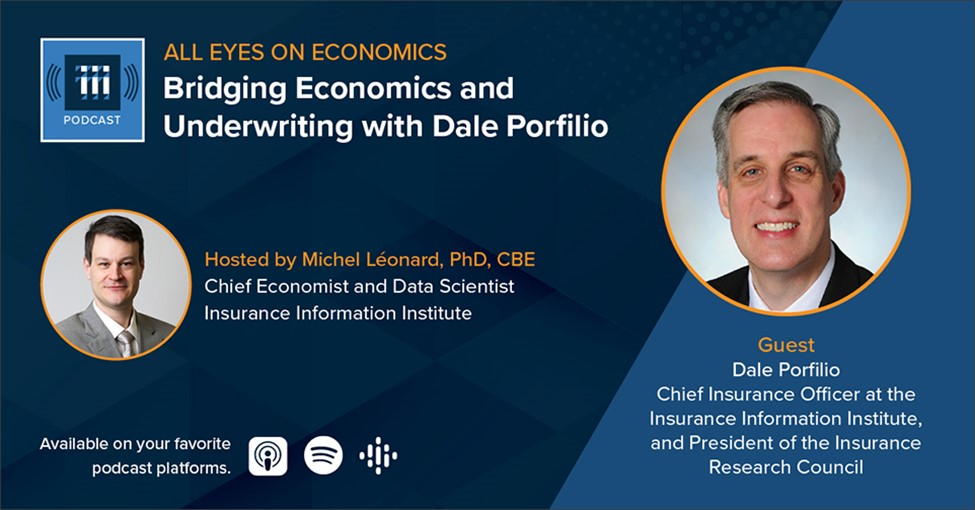
Insurance underwriting and pricing require a clear view of loss experience and reliable economic projections. Today’s dynamic environment – marked by historically high inflation, climate-related risks, and regulatory constraints that vary widely by state – complicate such projections while making them more important than ever.
“Actuarial ratemaking is prospective in nature, but you have to look at history to be able to do that,” explained Dale Porfilio, Triple-I’s Chief Insurance Officer and President of the Insurance Research Council (IRC), in an interview for the All Eyes on Economics podcast. “A core part of that actuarial ratemaking is to say, ‘How are losses different? How have they trended? How are they going to grow?’”
Current economic uncertainty – particularly via rising replacement costs and high general inflation – presents a myriad of evolving factors many actuaries may struggle to contextualize.
“It just takes a while to get through the timeline of claims occurring and losses getting paid,” Porfilio told host and Triple-I Chief Economist and Data Scientist Dr. Michel Léonard. “We can already be in a cycle of increasing or decreasing inflation, and you won’t see it in losses yet… You’re going to see it faster from economic indicators than you’re going to see it in insurance.”
For economists and actuaries alike, projections are data-driven inferences. Using multiple data sources and various forms of sophisticated analysis all strengthen the precision of those inferences.
For example, IRC – like Triple-I, an affiliate of The Institutes – is developing a database that aggregates detailed personal auto injury claims information from numerous insurers. It encompasses five and a half years’ worth of data on not only the total claim payout, but the specific injuries and care within each claim file.
A database of this magnitude has the potential to help insurance carriers improve the accuracy of pricing and underwriting. More important, this research will help policymakers and carriers identify opportunities to reduce claim costs, which can improve the affordability of personal auto insurance.
Ultimately, synthesizing diverse perspectives reduces the role of luck for insurers when setting rates.
Triple-I works to provide a “combined wisdom,” Porfilio said, through the quarterly Insurance Economics and Underwriting Projections: A Forward View, a joint report with Milliman. The report presents an underwriting projection model which – by using P/C replacement cost indices and economic growth data as leading indicators – is both actuarially and economically sound.
Understanding economic trends is crucial, but understanding how risk influences these trends is equally important. Ongoing geopolitical risk, for instance, continues to strain global supply chains, and integrating this information into underwriting projections is one way to build resilience against disruptions.
“Learning to speak as an economist or an actuary is another language,” Porfilio said, and resources such as Triple-I’s Chart of the Week serve to simplify the sharing of economic research for insurers and consumers.
This wealth of available data analysis ensures that “our best pick is our last pick,” Porfilio said. “We’re always putting our best answer on the page to share the best insights that we can…and educate and inform as wide of an audience as possible.”