
By Loretta Worters, Vice President – Media Relations, Triple-I
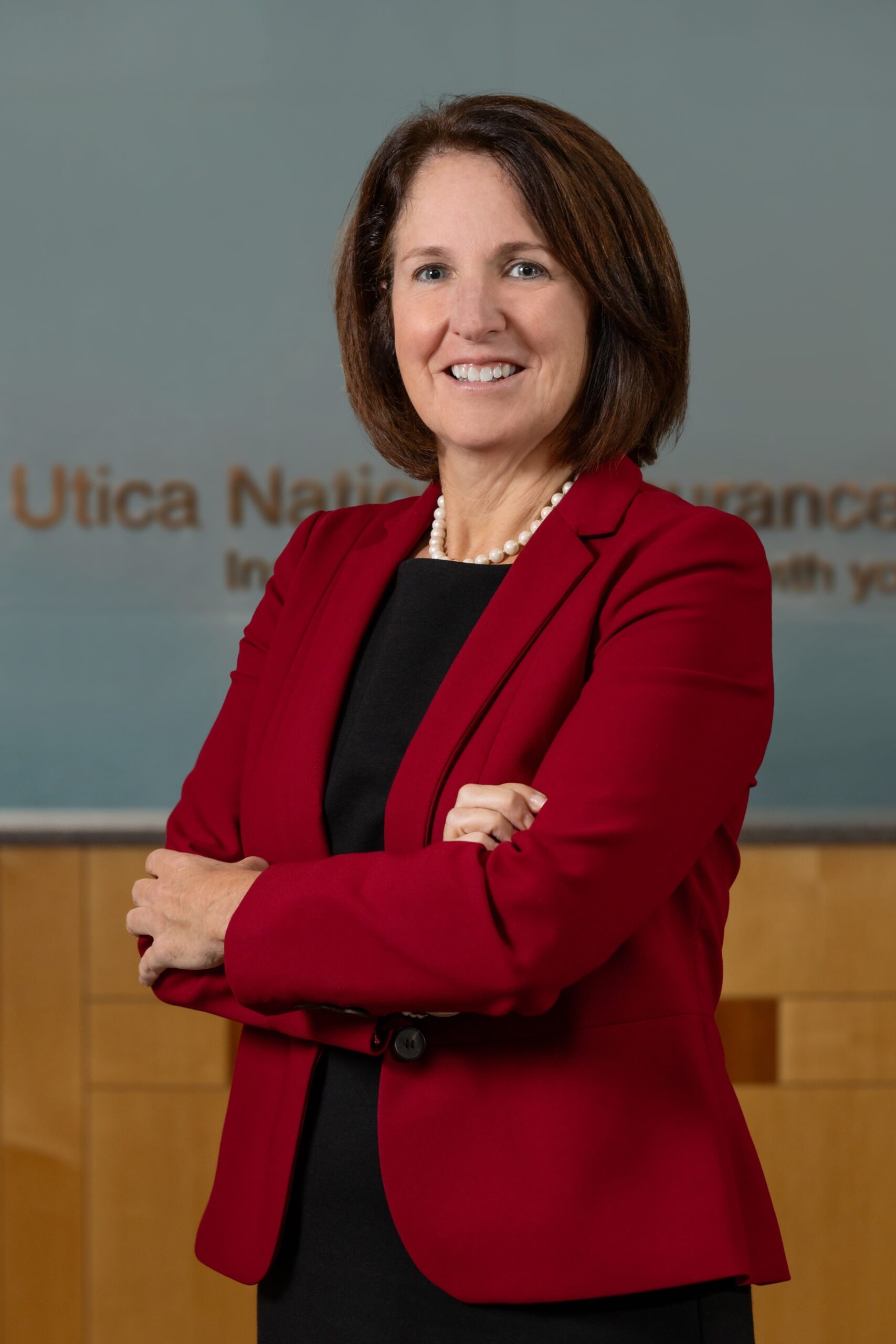
As we celebrate Women’s History Month, Triple-I is spotlighting leaders shaping the future of insurance. Sabrina Hart, CEO of Munich Re Specialty North America (MRS-NA), shares her insights on leadership, innovation, and the growing role of women in specialty insurance.
“I get to work alongside incredible people who advance my continued learning and growth,” Hart said. “It is extremely rewarding to contribute to further shaping a culture where talented people can contribute, grow, and see themselves reflected in leadership.”
Hart joined MRS-NA in 2022 to expand the Excess & Surplus lines business and was named CEO in 2023. Reflecting on that transition, she emphasizes listening, learning quickly, and setting clear priorities.
“In specialty insurance, agility and disciplined underwriting are essential, so ensuring that teams understand both the strategic direction and their role in achieving it is critical,” she said. “Unleashing the power of Global Specialties allows us to better serve our customers and our distribution partners.”
Early roles at Marsh and Zurich North America, including chief underwriting officer and executive vice president of the Midwest Region, gave Hart a holistic view of the industry.
“Working across these perspectives provided a broad view of the industry and reinforced how important relationships, trust, and transparency are in our business,” she noted. “The best leaders stay close to the fundamentals, understanding the customer, empowering experts to make decisions, and creating an environment where people feel accountable and supported.”
Her education – a bachelor’s degree in mathematics and completion of the Executive Management Program at Kellogg School of Management – has shaped her disciplined approach to leadership and decision-making.
Hart also helped advance inclusion in the industry by co-founding Zurich North America’s Women’s Innovative Network around 2007–2008. The initiative began after she attended an industry presentation on future workforce demographics that highlighted the growing diversity of the talent pipeline.
“At the time, projections showed that by 2020 about 54 percent of college graduates would be women,” Hart recalls. “It underscored that diversity and inclusion weren’t just cultural priorities. They were strategic imperatives for attracting the best talent and serving an increasingly diverse client base.”
The network was designed to create a structured forum where women could connect, share experiences, support one another, and build leadership capabilities. Over time, it has grown into a successful community that helps strengthen the industry’s leadership pipeline.
At MRS-NA, Hart focuses on attracting and retaining top talent by fostering meaningful work, growth opportunities, and a culture where expertise is valued. She sees the future workforce as increasingly interdisciplinary, combining underwriting, analytics, technology, and risk expertise.
Mentorship and sponsorship have also played a pivotal role in her career.
“Creating space for conversations about career growth and skill development, as well as helping others see opportunities they may not have considered, is essential,” she said.
Hart’s advice to young women considering insurance careers?
“Diverse viewpoints are essential to solving complex challenges,” she said. “Be curious and open to different experiences; be a lifelong learner. Build transferable skills and relationships, balance technical skills with interpersonal skills, seek mentors, and stay confident in your voice and perspective.”
Looking ahead, Hart is encouraged by the growing presence of women in leadership across insurance.
“Organizations are increasingly recognizing that diverse perspectives drive stronger decisions and better outcomes,” she said. “As that momentum continues, I’m confident we’ll see even greater representation and impact from women across our industry.”