
Inflation, replacement costs, climate losses shape homeowners’ insurance options

A person's hands are arched over a small model of a home that is placed on top of an insurance contract.

The homeowners insurance market is catching up to its cost drivers while still facing challenges to affordability and availability. Rates continue to climb as natural disasters intensify and replacement costs rise, but industry analysts expect meaningful improvement over the next two years. A new Triple-I Issues Brief provides a snapshot of the market’s performance and outlook, and discusses how some trends are shaping its future.

The latest results for the product line have helped narrow the anticipated 2025 gap between the performance of the personal and commercial lines. Despite a volatile start to 2025 driven largely by January’s destructive Los Angeles wildfires, homeowners insurance is still headed for double-digit net written premium growth this year.

With ​​nearly half of all homes in the United States at risk of “severe or extreme” damage from weather related events, climate risk looms large. In January 2025, the U.S. Department of the Treasury released “Analyses of U.S. Homeowners Insurance Markets, 2018-2022: Climate-Related Risks and Other Factors.“ a report based on the most comprehensive and granular snapshot of the homeowners insurance market to date. The agency found that climate risk is making it more costly for insurers to operate, as insurers’ costs in 2018-2022 were higher in areas with the highest expected losses from climate-related perils. The paid loss ratio, which reflects how much insurers paid for claims relative to the premiums they collected, was highest in the highest-risk ZIP Codes.

In 2025, the U.S. experienced its first hurricane season without a single landfall in a decade. However, the Triple-I issue brief explains, while 2025 economic losses from natural catastrophes are running below recent averages, other perils — such as severe convective storms, wildfires, and flash flooding — are becoming formidable sources of insurer loss. These increasingly frequent moderate disasters are challenging traditional catastrophe models built around infrequent peak perils, such as major hurricanes.

At the same time, soaring replacement costs have become the new normal for the homeowners market. Repair and rebuilding expenses have jumped nearly 30 percent over the past five years, fueled by inflation, supply-chain disruptions, rising construction material prices, labor shortages, and, more recently, new federal tariffs. Although the full impact of these tariffs has been milder than expected so far, the worst effects may simply be deferred until 2026 as inventories decline. Rising replacement costs translate directly into higher claim payouts, placing additional pressure on insurers and, ultimately, policyholders.

Beyond tariffs, other political and regulatory shifts are adding a new uncertainty as federal disinvestment in climate monitoring and mitigation may impede the insurance industry’s ability to accurately price risk, predict future losses, and, ultimately, provide affordable coverage. Meanwhile, several states grapple with balancing affordability with the stability and solvency of their insurance markets.

Insurance pricing must reflect these increased risks to maintain policyholder surplus, the funds regulators require insurers to keep on hand to pay claims. If premium rates fail to reflect increased costs, insurers may rapidly drain their policyholder surplus. This issue brief discusses how emerging technologies, such as advanced predictive analytics, aerial imagery, and smart-home sensors, could pave the way for more accurate pricing, faster claims processing, and improved risk prevention.

An Insurance Research Council (IRC) study indicates that homeowners familiar with some AI-driven insurance solutions view pricing using those technologies as fairer and express fewer concerns overall. These tools may play a critical role in bolstering affordability, rebuilding trust, and strengthening the resilience of the homeowners’ insurance sector amid escalating climate and economic pressures.

The issue brief’s list of factors and trends impacting the homeowners’ market isn’t intended to be exhaustive. Accordingly, future briefs on homeowners (or property lines in general) may highlight other pertinent topics, such as the link between insurance premiums and property prices. While home values in high-risk areas can often be diminished by rising premiums, higher home values can generally mean higher replacement costs, and consequently, lead to higher premiums. As of early 2025, home prices are up 60 percent nationwide since 2019 and still rising by 3.9 percent YoY, according to the Joint Center for Housing Studies at Harvard University. The Harvard report cites Freddie Mac data indicating home insurance premiums jumped 57 percent from 2019 to 2024.

We invite you to read our take on the homeowners’ market and follow our blog to keep abreast of key issues impacting the industry.

BIIC Publishes New Research Advancing Pathway for Black Leadership in Insurance

While the insurance workforce has become incrementally more diverse, Black professionals remain starkly underrepresented in C-suites and senior leadership.

The Black Insurance Industry Collective (BIIC) recently released a report, Fostering Black Leadership in Insurance, which calls attention to this industry-wide leadership gap.

The report explains how organizations can take strategic, data-driven actions to identify and overcome the structural barriers limiting the advancement of Black professionals in the industry.

Bureau of Labor Statistics data cited in the report shows that, in 2024, Black professionals made up 14.7 percent of the insurance workforce, up from 9.9 percent 10 years ago. Yet only 1.8 percent of executives at the 10 largest insurers were Black. Research shows companies with diverse leaders benefit, however.

“BIIC’s mission is to help the industry move from awareness to action,” says Amy-Cole Smith, Executive Director for BIIC/Director of Diversity at The Institutes. “Using various data sources, our report scans Black professionals’ representation in insurance, analyzes key structural challenges, and gives recommendations for setting targets and integrating accountability.”

The collective’s new report furthers its commitment to “identifying organizational strategies that enable talent to break through mid-level ceilings and into the C-suite.” It explains how diversity in senior management can positively affect brand, organizational culture, and the bottom line. Successful outcomes can include demonstrating a commitment to diversity in both the workforce and consumer markets, expanding organizational diversity, and achieving higher profits.

The report identifies four imperatives for measurable and sustainable progress:

  1. ​Accountability and transparency with data;
  2. Sponsorship initiatives to support potential leaders;
  3. Equitable succession planning that prepares diverse candidates before leadership vacancies arise; and
  4. A culture of psychological safety

These findings were the result of tackling the essential question, “Why haven’t hiring gains translated into increased representation in upper management?” Inequitable hiring and promotion, biased performance reviews, limited recruitment channels, and cultures that value “fit” over actual value can weaken the leadership pipeline. Many of these issues can occur across all organizational levels, but their cumulative effect is most evident in the C-suite.

For example, the report highlights the “glass cliff” phenomenon, whereby Black and other underrepresented professionals are often only promoted to senior roles during periods of organizational crisis. Explaining the lack of adequate support and long-term strategic commitment that often accompany these highly visible promotions, the report argues that this scenario heightens the risk of failure for newly appointed leaders and reinforces biased perceptions of leadership capability.

Putting a new leader on the glass cliff creates doubt about an organization’s overall commitment to maintaining a diverse workplace. BIIC indicates that a better course of action would require a strategic commitment to equity, such as involving Black professionals in succession planning during stable periods to prepare them for long-term success, rather than being positioned as last-resort problem solvers.

There is a discussion of problematic recruiting conventions, such as the tendency of hiring managers to use the word “qualified,” particularly in conversations about expanding recruitment to include more diverse candidates. This habit can perpetuate the bias that “diverse” and “qualified” candidates are mutually exclusive groups. Further, the word “qualified” isn’t tied to specific, objective, and job-relevant criteria. The resulting ambiguity allows the personal preferences of individual hiring managers (e.g., educational background, accent, or appearance) to shape their assessment of a candidate’s suitability, rather than focus on actual skills and ability to perform the job.

Community insights collected through BIIC’s engagements with more than 4,000 professionals reveal that career advancement can be hampered by a lack of visibility, insufficient exposure to decision-makers, or unclear career advancement pathways. Participants emphasized the importance of candid communication with managers, organizational agility, and access to leadership development opportunities in overcoming these barriers.

BIIC, a five-year-old nonprofit that is an affiliate of The Institutes, has worked to provide career advancement infrastructure for Black professionals – a strong network of peers, opportunities to learn from industry executives, and expanded resources through strategic partnerships such as 2022 collaboration with Darden School of Business at The University of Virginia.

Cole-Smith says, “BIIC’s goal is not only to elevate individual careers but also transform the industry’s leadership landscape, ensuring that diverse perspectives and voices shape its future.”

The insurance industry’s future depends on serving diverse communities, which requires addressing structural challenges and investing in inclusive leadership. Fostering Black Leadership in Insurance urges prompt action and systemic transformation. Even as workforce representation improves, advancement into executive ranks can remain restricted by persistent inequities unless organizations rise to the challenge.

Industry, Universities Team Up to Study Convective Storms

By Lewis Nibbelin, Research Writer, Triple-I

In a year marked by severe convective storm-induced damage across the United States, timely and accurate data is more essential than ever to understand, predict, and prevent these evolving weather perils. Though federal cuts to weather monitoring and modeling have raised concerns about the industry’s capacity for risk mitigation, a new research center backed by insurers and the U.S. National Science Foundation (NSF) aims to help bridge the gap.

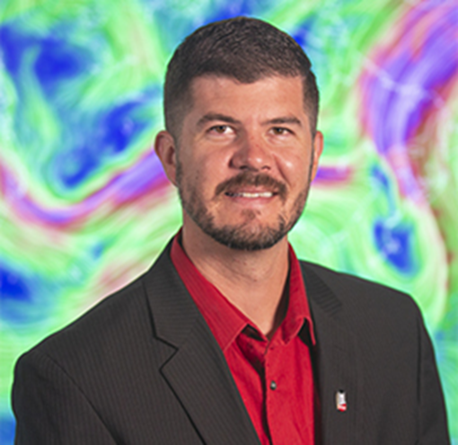
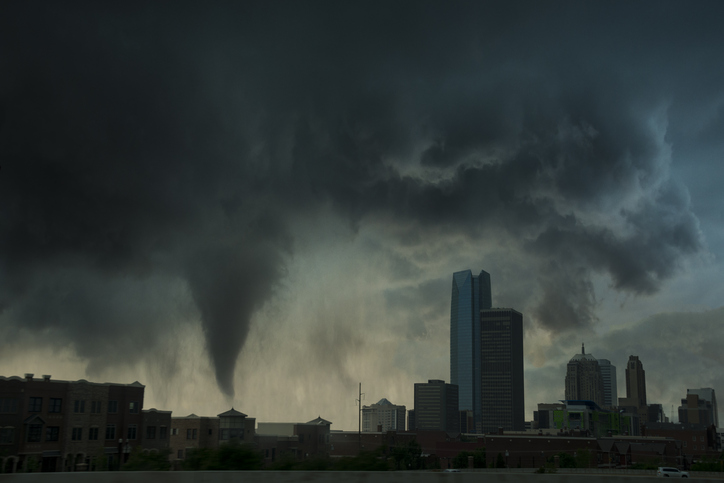
Directed by Dr. Victor Gensini, a professor at Northern Illinois University and a Triple-I non-resident scholar, the Center for Interdisciplinary Research on Convective Storms (CIRCS) will leverage the expertise of nearly two dozen scientists to develop research focused on advancing resilience against severe convective storms, which range from thunderstorms with lightning to tornadoes, straight-line winds, and hail.

Northern Illinois University and the University of Wisconsin-Madison launched CIRCS with $1.5 million in funding from NSF, as part of a joint initiative with the National Oceanic and Atmospheric Administration (NOAA) to create an Industry-University Cooperative Research Center (IUCRC) that can support the insurance sector.

Beyond funds under the IUCRC model, CIRCS also receives “funding for research, students, and lab equipment” from private industry members, most of whom are “insurance and reinsurance companies interested in research on convective storms,” said Gensini, who teaches in NIU’s Department of Earth, Atmosphere, and Environment. He added that CIRCS includes actuarial scientists within its panel of experts to “approach this specific peril from multiple directions.”

Rising in both frequency and severity, convective storms accounted for $42 billion in global insured losses during the first half of 2024 alone, driven by 12 U.S. storms with $1 billion or more in losses each, according to a Swiss Re report. Later Gallagher Re data supports the trend, with large U.S. thunderstorms contributing to $46 billion in insured losses through the third quarter of 2025, the fourth-costliest year on record.

Paradigm-setting research

In addition to the center’s launch, Gensini recently celebrated a major data haul gathered during the largest hail study ever conducted, known as ICECHIP – short for In-situ Collaborative Experiment for Collection of Hail in the Plains. Funded with an $11 million grant from NSF, the field study sent Gensini and more than 100 other scientists and students across the Great Plains to chase and analyze hailstorms, which facilitate as much as 80 percent of severe convective storm claims in any one year.

Collecting more than 10,000 stones for study, the researchers hope to reduce hail risk through improved forecasting, enabling residents to better protect themselves and their belongings before a hailstorm hits. As the first field campaign dedicated to studying hail since the 1970s, ICECHIP’s participants expect their data to inform research analysis for years to come, NIU reported.

“We recovered tennis-ball-sized hail or greater in about half of our instrument deployments,” Gensini said. “You hope and dream for these kinds of observations in order to push forward hail science.”

By partnering academia with industry and government agencies, CIRCS and ICECHIP showcase the kinds of collaborative, data-driven solutions needed to address climate risks in ways that respect the unique needs of all affected groups, fostering risk management strategies that can build resilience at a community level.

Learn More:

Storm-Resistant Roof Efforts Gain Ground

2025 Tornadoes Highlight Convective Storm Losses

Severe Convective Storm Risks Reshape U.S. Property Insurance Market

Hail: The “Death by 1,000 Paper Cuts” Peril

Triple-I/Milliman: Severe Convective Storms Restrain P&C Growth

2024’s Nat Cats: A Scholarly View

Storm-Resistant Roof Efforts Gain Ground

By Lewis Nibbelin, Research Writer, Triple-I

Severe convective storms cost insurers an estimated $46 billion in the first three quarters of 2025, Gallagher Re has reported, marking the third straight year of U.S. claims from these events through September exceeding $40 billion. Total losses from these storms – which include tornadoes, hail, straight-line winds, and drenching thunderstorms – reflect growing impacts from inland flooding and, in particular, the vulnerability of roofs to damage from these storms.

Approximately 70 to 90 percent of total insured residential catastrophic losses arise from roof-related damage, according to Insurance Institute for Business & Home Safety (IBHS) estimates. Though poorly maintained roofs contribute to this finding, outdated building codes exacerbate the risk, leading insurance industry leaders to advocate for widespread adoption of FORTIFIED roof standards.

Developed by IBHS, FORTIFIED standards can reduce severe weather damage in new or retrofitted homes through construction methods like sealing roof decks and anchoring roofs to wall framing using stronger nails. While such standards remain voluntary, Louisiana has modelled the proactive approach needed to facilitate adoption with the recent expansion of its Louisiana Fortify Homes Program, which began offering homeowners thousand-dollar grants to retrofit their houses along these guidelines in 2023, incentivizing roughly 40 percent of the now 10,000 FORTIFIED roofs in the state.

“FORTIFIED roofs are the long-term solution for affordable insurance in South Louisiana,” said state insurance commissioner Tim Temple, noting that his office aims to implement bigger and more standardized insurance discounts for FORTIFIED homeowners to reinforce the state’s already improved insurance rates.

An emerging trend

Though Louisiana became the “fastest-growing state” to adopt FORTIFIED standards, Alabama pioneered incentivizing them through its own Strengthen Alabama Homes program, financed by the insurance industry with more than $86 million in grants since 2016. Designed to enhance community resiliency while also lowering insurance rates, completed retrofits qualify residents for premium discounts ranging from 25 to 55 percent.

A May 2025 study from the Alabama Department of Insurance, in collaboration with the University of Alabama Center for Insurance Information and Research, showcases the program’s success, highlighting that FORTIFIED homes suffered less property damage and fewer insurance claims than homes built using other construction methods when Hurricane Sally made landfall in the state.

“The Center’s Hurricane Sally report doesn’t just quantify the effectiveness of the FORTIFIED program, it clearly demonstrates that homes can be built to survive storms, making them eminently more insurable,” said IBHS CEO Roy Wright. “This report should be a clarion call to communities across the country, urging them to implement Alabama’s multipronged approach to promoting disaster mitigation.”

Insurers answered the call in Oklahoma, North Carolina, and South Carolina, all of which boast similar programs backed by the insurance sector and accompanying premium reductions. Mississippi nearly joined their ranks before state funding for the grant program was suspended earlier this year, though insurance discounts remain available. States such as Florida, Georgia, and Minnesota also offer comprehensive insurance discounts for FORTIFIED properties, with the latter poised to fully replicate a grant program in response to mounting hailstorms.

Addressing cost concerns

While 75 percent of homeowners express willingness to invest in weather-resistant features, only 18 percent have reinforced or replaced their roofs with those materials, a recent Nationwide survey reveals. Grants help lower the cost of entry to FORTIFIED roofs for many homeowners, but it is worth noting the relative affordability of such upgrades, which can cost as little as $500 for a 2,000 sq. ft. home.

Describing the benefits of FORTIFIED standards as “measurable and increasingly essential,” Nationwide Property & Casualty president and COO Mark Berven emphasized the crucial role insurance agents play in raising consumer awareness of these risk reductions and their broad accessibility.

“Our industry needs to remind homeowners they have control in the face of severe weather events,” Berven wrote. “By investing in resilience, they can take an active role in protecting their homes, their valuables and their memories – giving them the peace of mind they’re looking for.”

Learn More:

Why Roof Resilience Matters More Than Ever

Study Touts Payoffs From Alabama Wind Resilience Program

Resilience Investment Payoffs Outpace Future Costs More Than 30 Times

Outdated Building Codes Exacerbate Climate Risk

FEMA Highlights Role of Modern Roofs in Preventing Hurricane Damage

Louisiana Senator Seeks Resumption of Resilience Investment Program

Commercial Lightning Losses: You Can’t Manage What You Don’t Measure

By Kelley Collins, Director of Business Development and Communications, Lighting Protection Institute

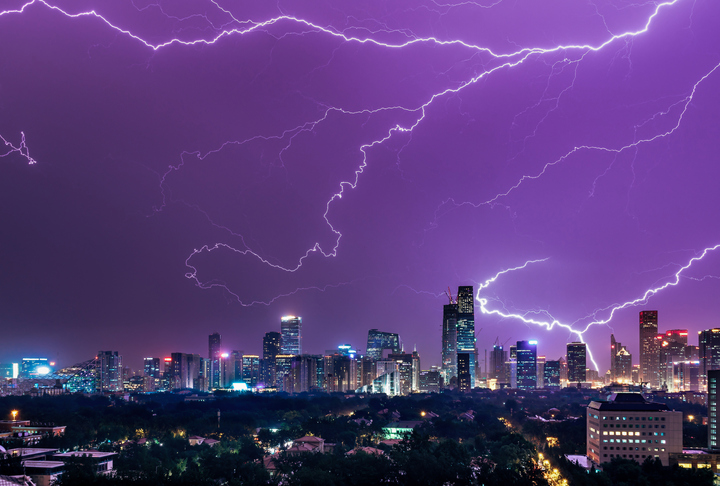
Lightning strikes costs homeowners more than $1 billion a year – but it’s unclear how much businesses lose through lightning-related damage. This is because many fires at commercial properties are recorded simply as “general fire damage”, making it hard to quantify lightning-specific losses or understand true commercial exposure.

In some jurisdictions, fire inspection forms lack a designated field for lightning. Further, inspectors may not be trained nor instructed to identify lightning as a cause. As a result, lightning-related fires often go unrecognized.

Insurers can help address these gaps by collaborating with fire service professionals.

Properly designed and installed lightning protection systems (LPS) significantly reduce risk and mitigate losses. To support accurate risk assessment, encourage mitigation, and appropriately value these systems, lightning must be identified as a distinct cause of loss in claims data.

Lightning damage also extends well beyond fire. Electrical surges can destroy wiring, controls, and electronic infrastructure, resulting in expensive business interruption. Illustrative cases reveal the scale of potential loss:

• A furniture manufacturer on the East Coast incurred over $1 million in insured damages from a single strike, including structural harm, inventory losses, production downtime, and lost revenue.
• A Midwestern apartment complex experienced over $50 million in claims for structural and electrical damage, as well as the displacement of residents.

These incidents demonstrate the high stakes of lightning events and the importance of mitigation. However, because consistent data across commercial properties is scarce, insurers, risk managers, and building owners lack a full picture of exposure, highlighting the need for better claims tracking to inform risk assessment and mitigation strategies.

A lightning protection system is far more than a single rod and cable. It is a coordinated network designed to intercept and safely redirect lightning energy away from structures and equipment. A compliant LPS includes five essential components:

  • Strike termination devices (air terminals/”rods”): metal rods that intercept a lightning strike.
  • Conductors: heavy braided cables that carry current toward the ground.
  • Grounding (earth termination): electrodes/loops that disperse energy into the earth.
  • Bonding / potential equalization: connecting metal and internal systems (ie. water, fire, security) so they rise/fall in voltage together, preventing side-flash.
  • Surge protective devices (SPDs): protect power/data/controls from transient over voltages.

Systems missing any of these elements, or not installed to national standards, are insufficient. Compliance with NFPA 780, UL 96A, andLPI 175 ensures thorough protection.

Proper installation, inspection, and maintenance are critical. Systems should be installed by certified lightning protection contractors and inspected/certified through independent third-party inspection programs. Ongoing maintenance and re-inspection, particularly after roof or structural changes or severe storms, helps ensure that the system continues to operate as intended.

Lightning protection systems, installed according to the standards, defend against both direct and indirect strikes. Direct strikes occur when a lightning bolt hits a building, potentially causing fire, structural damage, or electrical failure. Air terminals intercept the strike, and conductors safely route energy to the ground. Indirect strikes happen when nearby lightning induces surges through utility lines, piping, or the ground. SPDs, bonding, and grounding systems manage these surges, helping to protect life-safety systems, critical operations, and business continuity.

By addressing both direct and indirect risks, lightning protection systems protect property, minimize downtime, and reduce potential claims/costs.

Effective loss control begins with risk assessment. NFPA 780 provides a straightforward methodology that considers local lightning frequency, building height and footprint, occupancy, and operational continuity needs. Facilities where downtime carries high costs — or where electrical or operational systems are vital to the community — should be prioritized. When risk assessment is paired with certified installation, third-party inspection, and routine maintenance, the result is fewer and less severe claims, along with more resilient operations.

Lightning damage is preventable, but tracking is not as consistent as it is for other hazards, such as flooding. Standards-compliant lightning protection systems mitigate risks and improve resilience.

Insurers can reduce claims severity and gain better insights into lightning losses by tracking incidents, incentivizing mitigation and supporting standards-based protection. In addition, there is an opportunity to collaborate with fire service professionals to address gaps in fire inspection reporting and ensure lightning-related fires are accurately identified. 

For more resources, visit the Lightning Protection Institute.

Learn More:

The Importance of Protecting Critical Facilities From Lightning Strikes

Assess, Measure, Mitigate Your Lightning Risk

Lightning: Quantifying a Complex, Costly Peril to Support Resilience